









Inside the “Pentagon Pizza Index” and Why a Late-Night Slice Keeps Showing Up at the Center of Global Crises
At two in the morning, most pizzerias are either deep into cleanup or selling their last desperate slices to night owls and insomniacs. But occasionally, a single shop lights up like a pinball machine on Google Maps—suddenly busy, unexpectedly slammed, and doing a level of business that feels…historically suspicious.
That’s exactly what happened in early January 2026, when pizza orders near the Pentagon surged sharply in the middle of the night, coinciding with confirmed U.S. military strikes in Venezuela ,Within hours, the internet did what it does best: connected dots, shared screenshots, and resurrected one of the strangest recurring ideas in modern food lore.
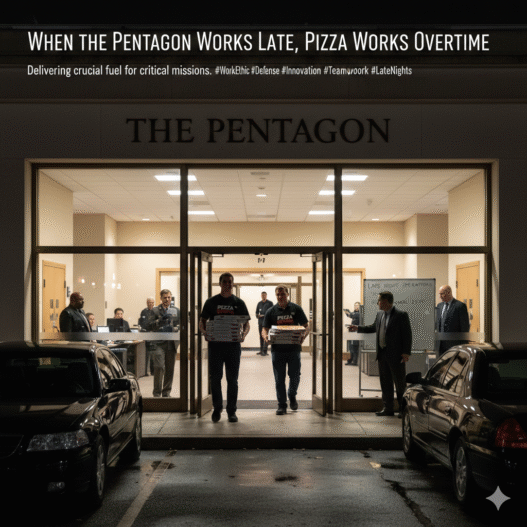
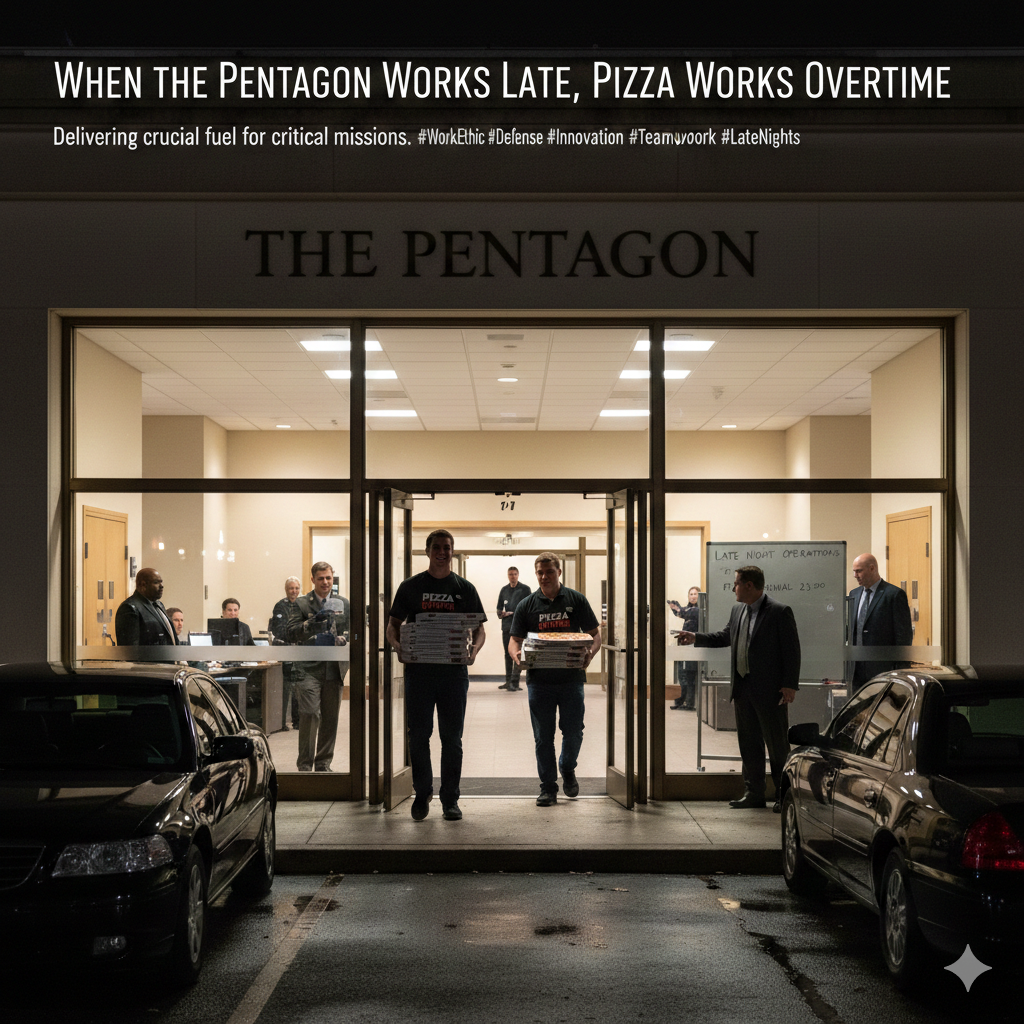
It’s known as the Pentagon Pizza Index—the belief that when global tensions spike, pizza deliveries near major government buildings spike first.
This isn’t about toppings predicting troop movements. It’s about logistics, human behavior, and why pizza—of all foods—keeps becoming the carbohydrate backbone of history.
What Actually Happened Near the Pentagon
On January 3, 2026, social media accounts tracking late-night food traffic flagged unusual activity at Pizzato Pizza in Arlington, Virginia, a short distance from the Pentagon. Google Maps data showed a sharp, sustained increase in busyness beginning around 2:00 a.m. ET, lasting over an hour before dropping back to near zero
Roughly one hour earlier, U.S. airstrikes had begun in Caracas, Venezuela. Later that morning, official announcements confirmed the operation, including the capture of Venezuelan president Nicolás Maduro
Correlation is not causation—every serious analyst repeats this mantra—but the timing was precise enough to reignite a long-standing curiosity: why does pizza keep showing up at moments of geopolitical stress?
The Origins of the Pentagon Pizza Theory
The idea isn’t new, and it isn’t purely internet folklore. As far back as 1990, Domino’s franchise owners in Washington, D.C. reported unusual late-night surges in orders to federal buildings during periods of international crisis, including the lead-up to the Gulf War. Similar anecdotes surfaced during Clinton’s impeachment hearings and major Cold War flashpoints
In recent years, the concept has been reborn as semi-serious open-source intelligence (OSINT). Accounts like Pentagon Pizza Report track publicly available foot-traffic data from mapping platforms—not to predict wars, but to observe patterns that feel oddly consistent
Pizza, it turns out, leaves data exhaust.
Why Pizza—and Not Anything Else?
There’s a deeply practical explanation hiding under the cheese.
Pizza is:
- Shareable: One order feeds many people without planning.
- Modular: Dietary needs are solved with toppings, not separate meals.
- Late-night friendly: Pizzerias stay open when other kitchens close.
- Low-disruption: No cutlery, no plates, minimal cleanup.
When large groups of people are unexpectedly stuck working through the night—whether in newsrooms, hospitals, or secure government facilities—pizza becomes the default fuel.
This isn’t romance. It’s operations.
The Pizza Industry’s Quiet Role in Crisis Infrastructure
From an industry perspective, moments like this highlight something pizza professionals already know: pizzerias are part of a city’s emergency metabolism.
Late-night shops near hospitals, transit hubs, and government buildings often maintain:
- Redundant dough production
- High-capacity ovens
- Simplified menus for speed
- Supplier relationships that support sudden volume spikes
Many operators rely on professional pizza suppliers directories to source bulk cheese, flour, and packaging that can handle unpredictable demand. Others streamline production using a streamlined dough management system to ensure consistency when staff are pushed into overtime.
These systems aren’t glamorous, but they’re what allow a shop to absorb a midnight surge without collapsing.
Home Pizza Makers: Why This Story Still Matters to You
Even if you never plan to feed a government agency at 2 a.m., the Pentagon Pizza Index has something to teach home bakers.
It underscores the power of simple, reliable pizza systems.
The same principles that keep a shop running during a crisis apply at home:
- A dependable pizza dough recipe you’ve tested repeatedly
- Tools that hold heat, like a baking steel for home ovens
- Ingredients that perform consistently, not just impress on Instagram
Many serious home cooks now use an AI-powered pizza recipe generator to dial in hydration, fermentation time, and flour blends based on their exact kitchen conditions. Reliability beats novelty when timing matters.
Is the Pizza Index “Real”?
Here’s where the wise skepticism comes in.
Historians and military analysts are quick to point out that modern government buildings have extensive on-site food options, and that delivery access is tightly controlled. Some Pentagon insiders insist pizza deliveries are rare or ceremonial rather than routine
So think of the Pizza Index as a signal with noise, not a prophecy.
It’s a pattern worth noticing, not a crystal ball.
But patterns—even imperfect ones—are catnip to human curiosity. Especially when they involve melted cheese.
What This Moment Says About Pizza Culture
Pizza endures because it occupies a rare cultural position. It’s:
- Casual but consequential
- Inexpensive but not cheap
- Fast but still communal
In moments of stress, people don’t reach for novelty. They reach for what works.
That’s why pizza keeps showing up in history’s footnotes—feeding reporters on deadline, medics on call, engineers debugging systems at dawn, and yes, occasionally, government staff managing world-shifting events.
Frequently Asked Questions
What is the Pentagon Pizza Index?
The Pentagon Pizza Index is an informal theory suggesting that spikes in pizza orders near U.S. government buildings sometimes coincide with major political or military events. It’s based on observed correlations, not official data.
Did pizza orders actually increase during the Venezuela strike?
Yes. Multiple outlets reported a sharp, late-night surge in activity at a pizza restaurant near the Pentagon during the timeframe of the U.S. strikes on Venezuela
Can pizza orders predict military action?
No reliable expert claims pizza orders can predict military events. At best, they may reflect increased late-night work during already-unfolding situations.
Why is pizza so common in late-night work situations?
Pizza is easy to share, widely liked, available late, and requires minimal coordination. It’s an efficient solution when many people need food quickly.
Has this happened before?
Yes. Similar pizza order surges have been anecdotally linked to events like the Gulf War, Clinton’s impeachment, and other international crises
The Slice at the Center of the Storm
Pizza didn’t cause anything in Venezuela. It didn’t signal an invasion. It didn’t leak classified information.
But it did what pizza has always done: show up when humans needed to keep going.
In a world obsessed with high-tech intelligence and predictive algorithms, there’s something grounding about the idea that one of our most reliable signals of intense human activity is still a box of hot food passed across a counter at 2 a.m.
History may be written by generals and politicians, but it’s often sustained by whoever keeps the ovens on.
This article contains affiliate links, which means The Pizza Weekly may earn a commission if you make a purchase through them, at no extra cost to you. We only recommend products and services we genuinely believe in.