








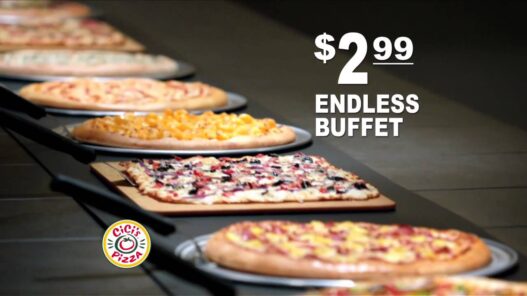
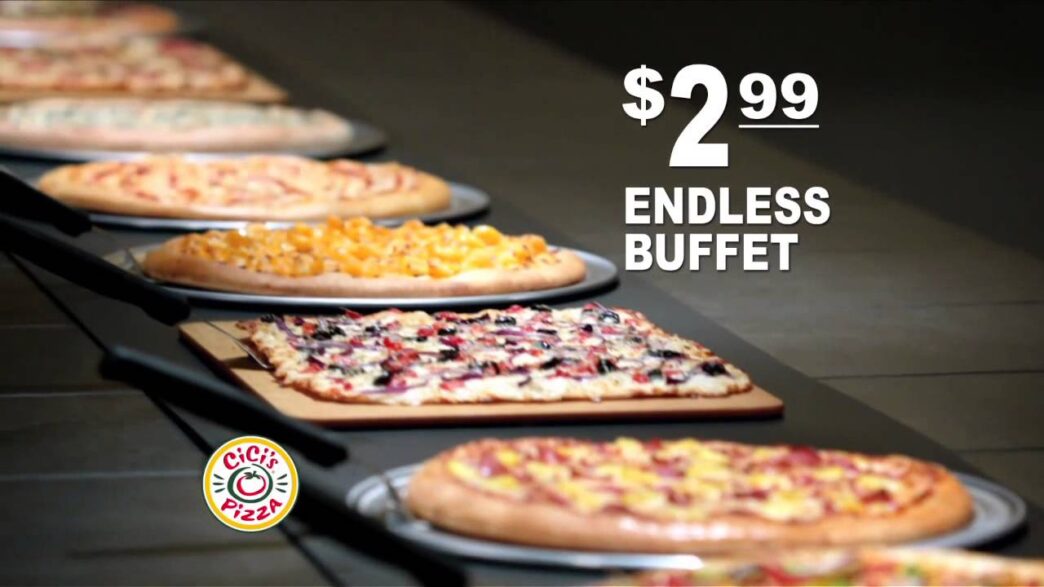

At a Cicis Pizza in suburban Dallas, families spill out of minivans, teenagers huddle over their phones, and a few curious millennials—faces equal parts ironic and sincere—join the queue that snakes past the door. They’ve come for the buffet, but more than that, for a memory: unlimited pizza for $2.99, a price that hasn’t been seen since 1985.
The promotion, part of Cicis’ new loyalty program launch, has become an unlikely cultural event. It’s a taste of the past served on a steel tray, a bite-sized time machine engineered to remind diners not only what pizza used cost, but what it used mean.
“This offer honors the generations who grew up around our buffet while welcoming a new wave of fans,” said Jeff Hetsel, Cicis’ president, in announcing the deal. The subtext is unmistakable: Cicis isn’t just selling pizza—it’s selling belonging.
The Nostalgia Economy Meets the Pizza Wars
To call this a discount would be to miss the point. It’s an act of emotional engineering, a move that recognizes how Americans consume not only food, but feeling.
In a marketplace saturated with high-end pies and artisanal toppings, Cicis is reminding customers of something elemental: the communal joy of abundance. The buffet wasn’t about crust or sauce; it was about freedom—an edible playground where kids learned the economics of appetite and adults discovered the pleasure of letting go.
For small, independent pizzerias, the lesson is less about price and more about perception. In the battle for loyalty, value isn’t only financial—it’s emotional. The genius of $2.99 lies in its precision: cheap enough to feel impossible, nostalgic enough to feel authentic.
Smart operators can take note without slashing their margins. Bundling experiences, rather than slicing prices, can yield the same psychological return. A “Family Movie Night” combo or a “Date Night In” special can conjure the same emotional resonance—a feeling that your local shop understands not just what you crave, but why.
Behind the Buffet Line: The Mechanics of a Miracle
Of course, a $2.99 buffet doesn’t run on sentiment alone. It’s a logistical ballet, a masterclass in operational discipline.
Pulling off this kind of promotion demands ruthless efficiency: bulk ingredient sourcing, razor-thin waste control, and the ability to move food faster than nostalgia fades. Cicis has the advantage of scale—negotiated supplier contracts, standardized recipes, and a data-driven kitchen model that leaves little to chance.
Independent operators can borrow that playbook. The lesson isn’t to copy the buffet, but to industrialize efficiency. Modern pizza POS systems, for instance, are no longer cash registers—they’re command centers. They track ingredient use, predict demand, and flag waste before it happens. Data is dough.
The same applies to equipment. The quiet revolution in kitchen tech—from programmable dough sheeters to smart ovens—has turned consistency into an algorithm. The shops that thrive are those that embrace the science beneath the slice.
From the Strip Mall to the Home Kitchen
Interestingly, the buffet’s democratizing impulse—the idea that everyone can have exactly what they want—is finding new life at home. Across TikTok and YouTube, amateur pizzaiolos are experimenting with wood-fired ovens and imported flours, chasing the holy grail of crisp-chewy perfection.
The home pizza movement mirrors the buffet ethos in miniature: infinite variation, infinite possibility. It’s pizza as participation, not just consumption.
The modern home chef seeks quality, yes, but also agency—the thrill of mastery. Mastering dough hydration ratios or sourcing San Marzano tomatoes becomes a way of reclaiming something personal in a prepackaged world.
The Future of Flavor
Cicis’ throwback promotion isn’t merely a marketing stunt. It’s a mirror held up to the American dining psyche—a reminder that even in an era of delivery apps and drone dispatches, food remains a profoundly emotional language.
In a post-pandemic economy defined by inflation, automation, and digital noise, that $2.99 sign does more than advertise a meal. It gestures toward something vanishingly rare: the collective memory of simple pleasure.
Whether you’re a chain executive optimizing yield, a local owner experimenting with sourdough, or a home baker dusting flour across your countertop, the message is the same. Success in the pizza world—perhaps in any world—comes from understanding that the product isn’t pizza.
It’s connection.