








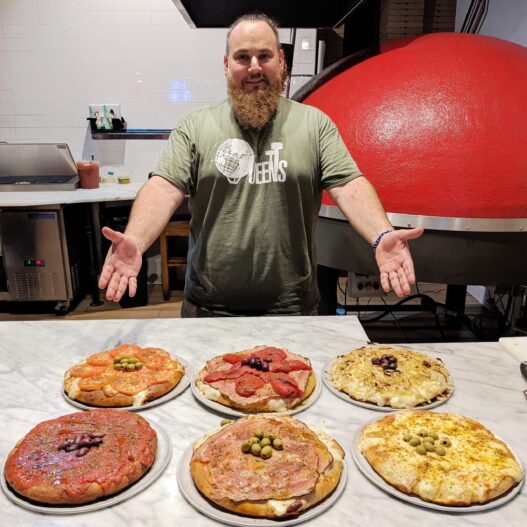
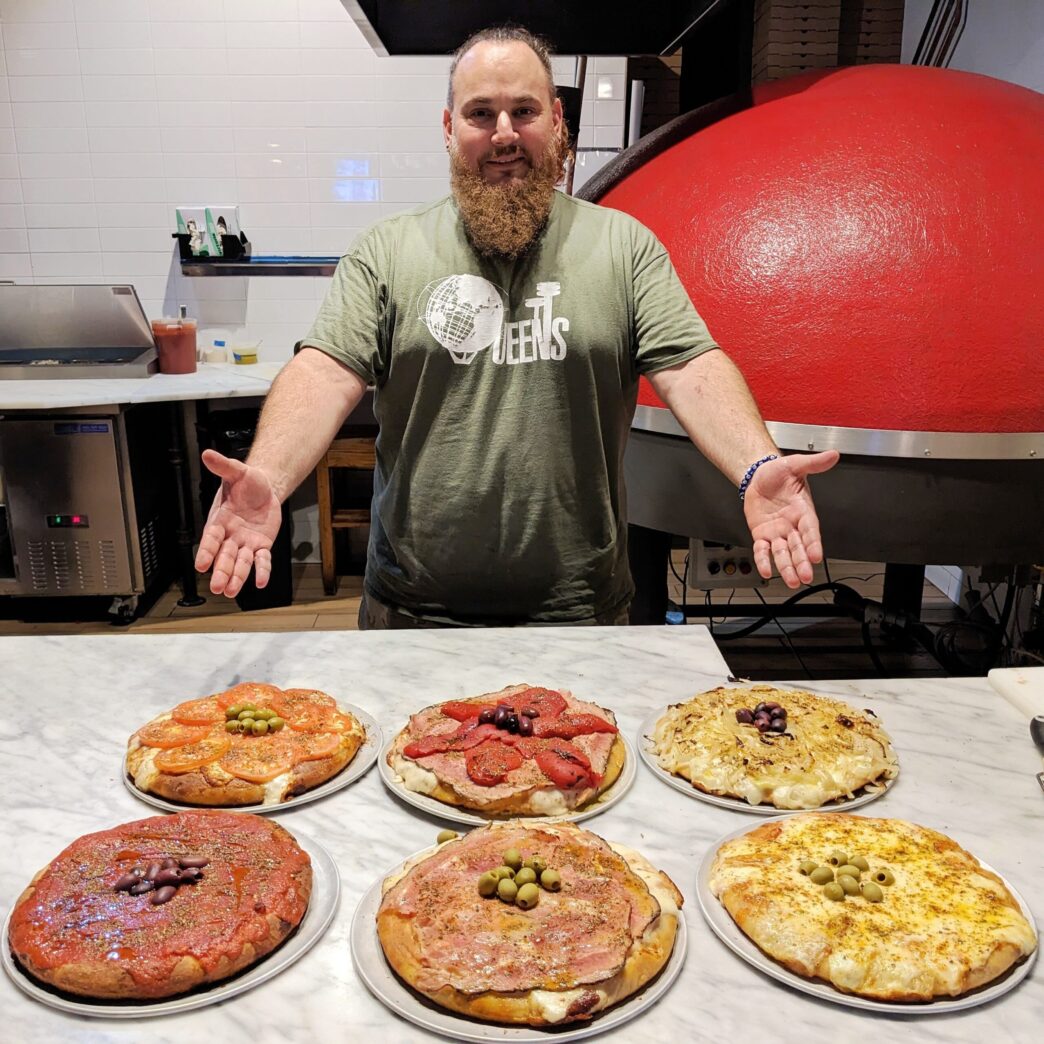

In an era when every corner slice shop has an angle fermentation time, oven type, imported flour , OG Papafern has decided his job is not to tweak, but to tell the truth. His truth is Argentine pizza: a focaccia‑rooted, cheese‑heavy, chimichurri‑laced style born in Buenos Aires and too often misread as a gimmick in the age of the viral cheese pull.
By day, he works with special‑needs kids in New York City schools. Nights, weekends and summers, he turns into “El Rey de la Fugazzeta,” hauling dough formulas and family stories from city to city for pop‑ups, festivals and collaborations. His pies routinely sell out. His six‑second cheese pulls loop on phones around the world. But what he is really trying to export is a culture, an immigrant history and a very specific way of understanding abundance.
We spoke with OG Papafern about the chimichurri his daughter will one day inherit, the wood‑burning oven he grew up with in Buenos Aires, the New York pizzeria that sent him down the dough‑nerd rabbit hole, and why he’s more comfortable calling himself a teacher than an influencer. What follows is our conversation, lightly edited for clarity and length.
1. Your Instagram bio crowns you “El Rey de la Fugazzeta” and “King of the Cheese Pull.” When did you realize that Argentine pizza—and that dramatic stretch of cheese—could become your life’s calling rather than just a family comfort food?
My calling is working with special needs kids. But Pizza Argentina is a hobby that is almost full time like a job. I just wanted to let people know that we have our own style of pizza. And from there it grew from posting the pizzas I made on Instagram to driving around the country doing events so that people can try the pizza.
2. If you had to explain Argentine‑style pizza to a New Yorker who has never left the five boroughs, what is the one slice, one memory, and one aroma you would use to tell that story?
It’s not just the New Yorkers, even pizza judges don’t know what it is. That’s why it’s my goal to teach people about the style. The pizza comes from focaccia. Immigrants from northern Italy brought it over. One day someone in a bakery decided to put cheese on it and it transformed to what it is today. A focaccia‑based pizza with a lot of cheese and toppings.
3. You grew up in your father’s Buenos Aires pizzeria before spending four decades in New York classrooms and kitchens. How do those two cities show up in a single pie that comes out of your oven today?
NY is a city where you can offer traditional cuisine without having to change it to local tastes. Italian food changed everywhere it went. I didn’t want to make a NY Argentina style pizza. I want to keep it traditional and represent my country to the fullest. Not a watered‑down version or toppings that aren’t traditional. There aren’t too many cities in the world people can do that in.
4. Argentine pizza is often described as “more cheese than dough, more abundance than restraint.” What are the non‑negotiables in your own dough, cheese, and topping formula that make a fugazzeta unmistakably yours?
What differentiate pizzerias in Buenos Aires is the style. We have 3 that are the most common. Al molde, which is a thick pan pizza; media masa, which is a thinner version; and a la piedra, which is brick‑oven pizza. All 3 styles have more cheese and toppings than most of the styles from around the world. But the one thing that is unique to each pizzeria no matter the styles they do, is the chimichurri that they finish the pizza with. I use the recipe from my dad’s pizzeria, Traka Traka. It’s a secret that only my daughter or nephews will learn.
5. Your pop‑ups routinely sell out and your cheese pulls travel the world in a few seconds of video. When you design a new pie, are you cooking first for the palate, for the camera, or for the culture you are trying to represent?
It’s for the culture. I don’t care if people think it’s too much cheese or toppings. I keep it traditional based the way I make my pizzas like the best of Buenos Aires. I do try to make the toppings symmetrical so it looks prettier. I have a darker bake because that’s how I prefer my pizzas. As far as designing a new pie, I add pies to the menu but I don’t invent new pies. It’s a different traditional pizza that I put on the menu.
6. You have cooked alongside and learned from some serious New York pizza names at festivals and collaborations. When you are sourcing ingredients for a pop‑up—especially cheese and flour—who are the suppliers you trust, and what have they taught you about elevating an “immigrant” style like Argentine pizza?
I learned from many people around the world, from learning in person to watching videos. The pizzeria that sent me down the dough rabbit hole is King Umberto. I had to move and tried their pizza and it was so much better than what I used to eat in my old neighborhood that I had to know why. That’s when I started to learn about long fermentation and preferments. It changed the way I make pizza.
7. A lot of fans know you through a single Instagram reel. What do you wish those viewers understood about the labor, technique, and history behind that six‑second cheese pull?
One thing is that a lot of people think that fugazzeta is the name of the style of pizza from Buenos Aires. But it’s just the pizza with no sauce and a lot of onions that is called a fugazzeta. The style is called Porteño Style because it’s from Buenos Aires and people from Buenos Aires are called porteños.
8. You have spoken about experimenting with cold fermentation and refining your dough over the years. Can you walk us through the turning point—one batch, one mentor, or one failure—that changed your understanding of what Argentine dough could be?
I mentioned King Umberto. Giovanni Chez is the one that sent me down the rabbit hole. But once I started experimenting, I made a lot of mistakes. One was that I made too many changes at the same time. You should always only change 1 thing so you can see what difference it made. And keep changing only 1 thing until you come to a dough that is consistently outstanding. Then use that dough but continue to experiment and trying new things, never settle.
The other thing is that you have to use great ingredients. You can’t make something great with garbage. Doing long fermentation with cheap supermarket brand flours isn’t gonna give you great results. Stay away from bleached and bromated flours and get cheese that you cube, slice or shred yourself. No anticaking stuff. You won’t get epic cheesepulls and it will burn faster.
9. Your journey includes both the chaos of New York public schools and the chaos of pizza events. How does working with special‑needs students shape the way you think about hospitality, patience, and the way you run a pop‑up line?
Expect the unexpected. Adaptability. When I travel the country, I’m not carrying everything with me. The flour, sauce and the cheese I get from the host pizzeria or local wholesaler. Sometimes I have to use a flour that I never used before. But my dough recipe will work with any flour. I just never use bleached or bromated flour.
Stepping into a kitchen that I never worked in before isn’t easy. I don’t want to get in the way of their flow. That is the part that I am most nervous about in a collab. I want it to be a great experience for everyone involved.
10. You are actively researching the history of Italian immigration to Argentina and the birth of its pizza. What is one story from that research that you think would surprise even seasoned pizza professionals?
The one thing that surprised me is that one of the things that I was most proud about was that we have chimichurri for pizza. The reason why the early immigrants came up with a chimichurri is because they didn’t like the taste of the cheese!!!
11. When you are planning a new collaboration or pop‑up, what does your ideal oven setup look like—from fuel to temperature to brand—and how does that differ from the ovens you grew up with in Buenos Aires?
My dad’s pizzeria had a wood‑burning oven that used quebracho as fuel. Then he had a flamethrower put in it and converted it to gas. I like to bake at about 550. I like electric ovens that have separate top and bottom temps. The most difficult ovens to work with are conveyor belt ovens. I can make it work but because of the different baking times of the toppings it takes a lot of testing to get it perfect.
12. You have called Argentine pizza a polarizing style—people love it or they dismiss it as “too much.” What is the moment, flavor, or slice that most often converts skeptics into believers in front of you?
The biggest test is kids. Parents come to me and ask me to make a cheese pizza for their kids without chimichurri. I tell the parents that I will make it with chimichurri and if the kid doesn’t like it, I’ll make another for free without it. Not once did a parent come back to ask for one without chimichurri. I got a lot of videos sent to me of the kids eating the pizza with chimichurri saying it’s the best pizza they ever had.
13. Every pizzero has a mental map of the world made of ovens and dining rooms instead of airports. Which pizzerias—whether in Buenos Aires, New York, or somewhere in between—are on your personal Mount Rushmore, and why?
King Umberto has multiple rooms, patio and outdoor area for dining. The dough room and underground bakery. You can grab a slice or sit down for fine dining under a chandelier.
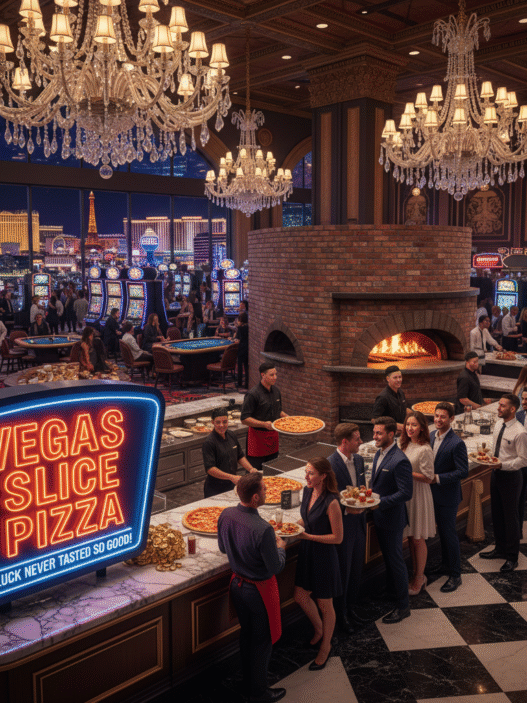
Pizza Rock in Vegas has so many of the world’s pizza styles in one place. I would love to do a collab there someday.
Any pizzeria in Buenos Aires that has been around 100 years old. No frills, white tiles, cans on shelves in the dining area, pictures of famous people that have eaten there.
14. Your highlights include charity work and events with organizations like Slice Out Hunger. How intentional is your choice to pair this very rich, indulgent style of pizza with a message of generosity and social responsibility?
Not intentional at all. It’s the style of pizza I do and Slice Out Hunger is a great organization with a noble goal. I just try to help out in whatever way I can.
15. When a young pizza maker DMs you asking how to make “a real Argentine fugazzeta,” what is the first mistake you warn them about—and what is the first risk you encourage them to take?
I tell them to use the best ingredients they can get. Don’t make the mistake of using cheap ingredients to be able to put a lot of cheese and toppings. It’s better to put less but better quality.
Risk: spend money on equipment, go big or go home.
16. If you had to name one single recipe that feels like your definitive statement—your master fugazzeta, or perhaps a lesser‑known Argentine style—what would it be, and how much of that recipe are you actually willing to give away?
I give people my dough recipes all the time. How to do the Masa Padre preferment. I even give people some to start using and feeding. But the only thing I won’t tell people is the chimichurri recipe.
17. Your audience clearly responds to spectacle—lava‑like cheese, towering toppings, festival energy—but you also talk about scholarship and writing a book. How do you balance being an influencer with being a historian of your own cuisine?
I don’t like to describe myself as an influencer because of the image that sometimes comes to people’s heads when they think of that word. I would never say something is good because someone is paying me. I just teach people about the pizza from my country and also when I eat regional styles that are not common.
I think that research and finding why things are the way they are now and where they evolved from is important to know where we are going. I am writing a book because it’s another medium to teach people about the styles from Argentina. I will also make a cookbook that will have multiple recipes with different preferments and hydration that a home pizza maker can use or a pizzeria owner.
18. Argentine pizza was born from immigrants who, once they had a little money, expressed abundance through food. In your own life, what does “abundance” look like now—on the plate, in the dining room, and off‑camera?
Because I chose to work with special needs kids, abundance to me looks like having money at the end of the month because the pay is so low for NYC. But to have money at the end of the month means spending very little during the month. But with that money I can make the trips out to the different pizza trade shows and competitions, and my summer road trip doing collabs in different cities around the country.
19. If you could design a single night in New York dedicated entirely to Argentine pizza—one oven, one neighborhood, one guest list—what would that event look like, and what story about Argentina would you want every guest to carry home?
It would be similar to Slice Out Hunger’s $1 slice fundraiser in Manhattan. People would come and donate money and take 1 slice per dollar they donate. I would have about 15 different slices. And a couple of thousands of people would come in and get slices.
People that barely make it to the end of the month can come and feed the entire family for 10 bucks, or a group of friends with money can come try it for the 1st time for a good cause.
20. Looking ten years ahead, what is the legacy you want people to taste when they bite into an Argentine slice in New York—whether or not they know the name OG Papafern?
I want people when they think of Argentina to think about not only of Messi, tango and asado but also pizza.
Argentine pizza has always been about more than volume—the height of the cheese, the density of the crumb, the line outside a century‑old bar‑counter in Buenos Aires. In OG Papafern’s hands, it becomes a way to talk about migration, about teachers who moonlight as ambassadors, about what happens when you refuse to dilute a style just to fit a trend.
If a decade from now a kid in Queens grows up thinking “Argentina” and instinctively adds “pizza” to the short list of Messi, tango and asado, it will be because people like him insisted on telling the whole story—one thick, chimichurri‑finished slice at a time.