









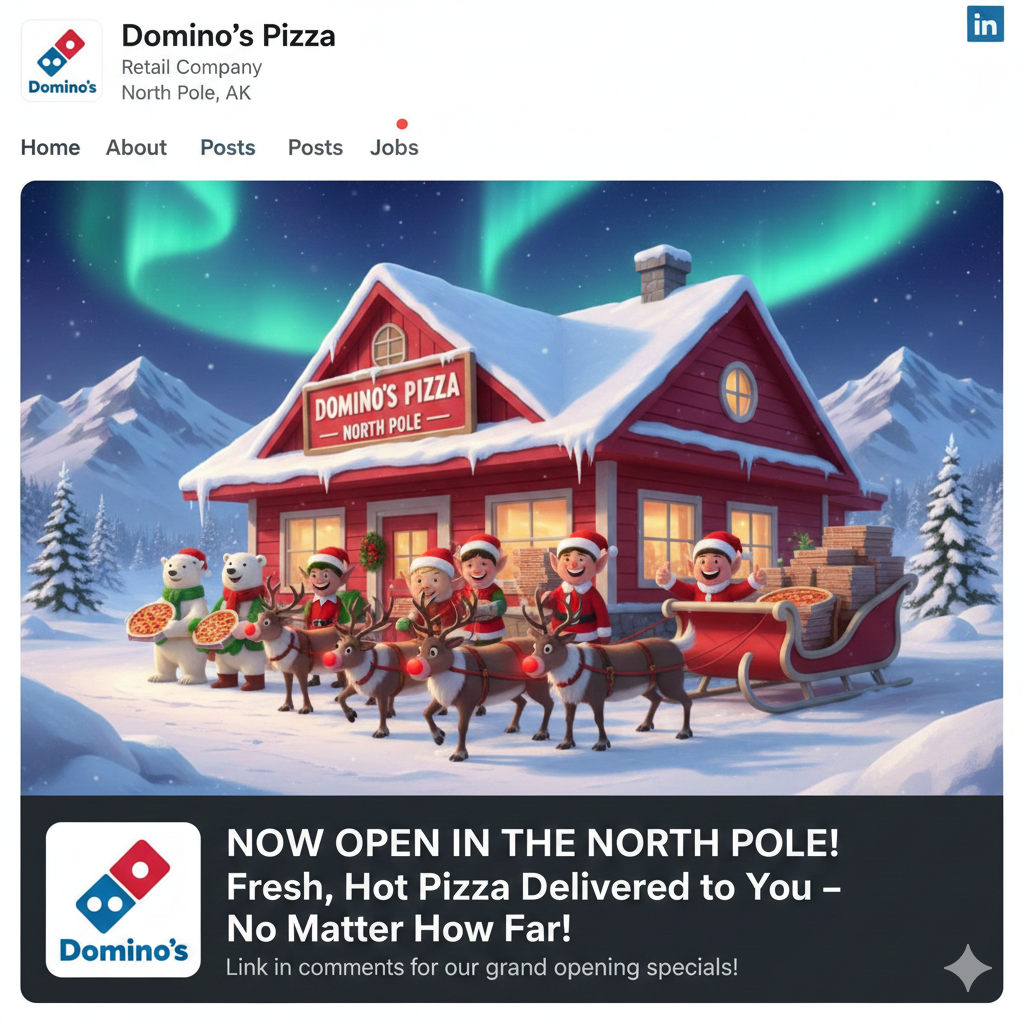

Christmas technically happens every day in North Pole, Alaska—but this year, the real holiday miracle is hot, cheesy, and arriving in an insulated delivery bag.
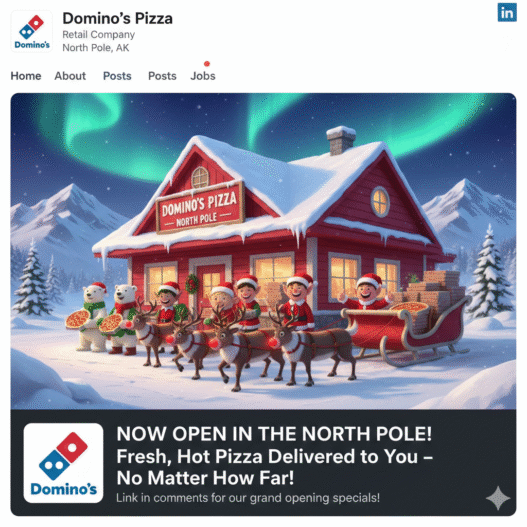
Domino’s has opened its first-ever North Pole location on Santa Claus Lane, turning a quirky tourist town into a live case study in pizza shop marketing strategies, extreme logistics, and what it takes to deliver pizza joy at the edge of the Arctic. For home pizza obsessives, shop owners, and suppliers, this tiny store under the northern lights is packed with big lessons.
Local franchise owner Bryan Dobb, who operates Domino’s locations across Alaska and Canada, put it simply in an interview with Alaska Business Magazine:
“I’m thrilled to open our doors to this amazing area and offer delicious pizza at a renowned value… we have something for everyone to enjoy.”
Let’s unpack what that means for three audiences: pizza lovers baking at home, suppliers fueling the pizza economy, and shop owners trying to grow in tough markets.
A Pizza First: Why a Domino’s in North Pole Matters
The North Pole location sits at 320 N. Santa Claus Lane, but this isn’t just a cute address for a press release. It’s a strategic move in a small community that already has Pizza Hut and Great Alaska Pizza Company. Domino’s isn’t just dropping another store; it’s entering a competitive micro-market with a very specific story.
The “Pizza Theater” Experience
The store uses Domino’s open-concept “pizza theater” layout, where guests can watch every step—from dough stretching to topping and baking. In a town defined by fantasy and spectacle (elves, reindeer, and Christmas décor 365 days a year), this is smart:
- It turns pizza making tools and workflows into a live show.
- It reinforces transparency around ingredients and consistency.
- It creates Instagram- and TikTok-friendly visuals that support word-of-mouth and local tourism.
For home bakers, this is your blueprint: if you want “Domino’s-level consistency” in your kitchen, you need to understand not just recipes but process—heat, timing, and repeatability.
From Arctic Ovens to Your Kitchen: Home Pizza Lessons from North Pole
If a store can bang out consistent pies in subzero Alaska, you can absolutely dial in your home setup.
1. Start With Heat: Building a North-Pole-Proof Home Pizza Setup
Commercial Domino’s stores rely on conveyor ovens designed for relentless throughput in harsh conditions. At home, the closest you’ll get is investing in the best home pizza oven you can reasonably afford.
Look for portable outdoor gas or electric models that hit 800–900°F and heat quickly even in colder climates. Well-reviewed pizza ovens, paired with a solid pizza stone or baking steel, can transform your crust from “pretty good” to “pizzeria crackle.”
A simple high-heat home setup often includes:
- A compact outdoor pizza oven
- A heavy baking steel or stone for indoor pies
- A sturdy pizza peel and turning peel for control
- An infrared thermometer to ensure stone and dome temps are truly pizza-ready
2. Dough and Ingredients: Matching Chain-Level Consistency
Domino’s doesn’t win because it has the fanciest toppings; it wins because the dough behaves the same way, every day, in 21,700+ stores worldwide.
For home cooks, that means:
- Locking in one pizza dough recipe and sticking with it until it’s muscle memory.
- Standardizing hydration, fermentation time, and ball size.
- Using high-protein flour for structure and snap.
If you want to level up your repertoire, explore curated pizza dough recipes and artisanal pizza ingredients tailored to different styles—Neapolitan, New York, pan, Detroit, and more. That kind of recipe intelligence lets you experiment without reinventing the wheel.
3. Tools of the Trade: Small Investments, Big Results
Inside the North Pole store, the pizza making tools are simple but robust—cutters, screens, proofing trays, dough boxes, and topping pans that hold up under rush-hour chaos.
At home, a few pro-grade upgrades go a long way:
- Stackable dough trays to control fermentation
- A sharp, rocker-style pizza cutter
- Stainless prep containers for mise en place
- A reliable digital scale for gram-precise dough
Combine a strong pizza dough recipe, quality tools, and high, consistent heat, and you’re functionally recreating core elements of Domino’s workflow at home—minus the delivery drivers.
What North Pole Teaches Pizza Suppliers and Industry Players
Behind every new store opening is a quiet army: pizza suppliers figuring out how to get cheese, flour, and equipment into a place with serious logistical constraints.
The North Pole store highlights several key trends:
1. Bulk Pizza Ingredients in Remote Markets
To support steady operations in Alaska, suppliers must master:
- Bulk pizza ingredients that travel and store well in extreme cold
- Packaging designed to handle temperature swings
- Inventory strategies that minimize waste but avoid outages during storms or holiday spikes
If you’re a distributor or multi-unit operator, dial in your network using a curated pizza suppliers directory to identify partners experienced in remote or seasonal markets.
2. Commercial Pizza Equipment Built for Abuse
From dough mixers to conveyor ovens, commercial pizza equipment in North Pole isn’t living an easy life. Reliable, low-maintenance options win:
- Heavy-duty commercial mixers that can handle back-to-back dough batches
- Efficient ovens tuned for consistent bake times in fluctuating ambient temperatures
- Energy-conscious designs that help manage costs in regions with higher utilities
Pair that with an eye on sustainable pizza sourcing—eco-responsible packaging, regional suppliers, and reduced food waste—and you’re no longer just delivering slices; you’re future-proofing your operation.
For a broader view of ingredient and equipment partners, bookmark The Pizza Weekly’s trusted suppliers list as a starting point when evaluating who can genuinely support growth in tough geographies.
Tech, POS, and Delivery: Running a Pizza Shop at the Edge of the Arctic
North Pole may sound whimsical, but it’s a brutal testing ground for food service technology pizza operations.
1. The Right Pizza POS System
To manage rushes, delivery zones, and promotions, a modern pizza POS system is non-negotiable. Look for systems that:
- Integrate online ordering and in-store screens
- Track toppings, bulk pizza ingredients, and waste in real time
- Offer built-in loyalty and SMS or email tools for customer loyalty pizza campaigns
Many restaurant-grade POS terminals and peripherals now come packaged with cloud-based software designed specifically for pizzerias.
2. Delivery Tech and Routing in Harsh Weather
In North Pole, a bad routing decision isn’t just inefficient—it’s dangerous.
Smart pizza delivery software can:
- Optimize routes based on current conditions
- Balance driver workloads
- Reduce delivery times, protecting quality and safety
Add durable delivery bags, vehicle organizers, and hands-free mounts, and your delivery fleet becomes a mobile extension of your pizza theater, not an afterthought.
3. Marketing in a Town Where Santa Is the Mascot
North Pole Domino’s is leaning hard into place-based storytelling. Dobb jokes that “whether you’re an elf looking for extra holiday cash or a reindeer ready to dash, we’ve got a spot for you”—turning hiring into marketing content.
For any pizzeria, key pizza shop marketing strategies inspired by this launch include:
- Hyper-local storytelling: Tie your brand to local icons, sports teams, or landmarks.
- Community giving: The North Pole store’s food drive for the Fairbanks Community Food Bank reinforces Domino’s as a neighbor, not just a chain.
- In-store events: Ribbon cuttings, kids’ activities, and limited-time offers create buzz beyond digital ads.
Pair these with marketing tools—email platforms, marketing software, and even simple in-store signage kits—and you can punch above your weight even against global brands.
FAQ: North Pole Pizza, Home Ovens, and Shop Strategy
Why is the North Pole Domino’s opening such a big deal in the pizza world?
It’s rare to see a major chain expand into such a small, remote, highly seasonal market. The North Pole store is a live experiment in logistics, pizza shop marketing strategies, staffing, and community integration—all under extreme weather conditions. What works here can inform tactics for mountain towns, islands, and rural markets worldwide.
What’s the best home pizza oven setup to mimic a Domino’s-style bake?
For most enthusiasts, a compact outdoor home pizza oven that reaches 800–900°F, combined with a baking steel or stone and a reliable pizza peel, is the sweet spot. High heat plus a consistent pizza dough recipe is far more important than chasing obscure toppings.
Where can I find reliable pizza dough recipes and ingredient ideas?
If you’re serious about experimenting with styles and artisanal pizza ingredients, explore curated recipes and ingredient pairings on Pizzaiolo’s recipe hub. It’s a fast way to move from guesswork to data-backed, high-performing dough and topping combinations.
How do pizza suppliers support stores in extreme locations like North Pole?
Suppliers focus on stable bulk pizza ingredients, durable packaging, and dependable freight options. Many pizzerias and distributors rely on a specialized pizza suppliers directory to find partners who are already experienced in remote or challenging regions.
What tech stack does a modern pizzeria need today?
At minimum: a purpose-built pizza POS system, integrated pizza delivery software, and tools for customer loyalty pizza programs (email, SMS, or app-based rewards). Add resilient POS hardware, tablets, and peripherals plus delivery equipment, and you’ll be positioned to compete on both convenience and experience.
This article contains affiliate links, which means Pizza Magazine may earn a commission if you make a purchase through them, at no extra cost to you. We only recommend products and services we genuinely believe in.